

Índice
Principais tomadas de decisão
- A RFP deve apresentar os objetivos e desafios do cliente em detalhes, assim como fornecer diretrizes sobre como o consultor será compensado e quaisquer outros requisitos específicos.
- Uma RFP eficiente para consultoria deve ser bem estruturada, clara e concisa para comunicar com eficácia seus requisitos a possíveis empresas de consultoria.
- O fim do jogo, ao redigir uma RFP para consultoria, é maximizar as chances de sucesso de sua compra.
- Pensar fora do RFP tradicional para a caixa de consultoria começa lembrando a si mesmo que você não está fazendo uma compra. Você está resolvendo um problema da empresa.
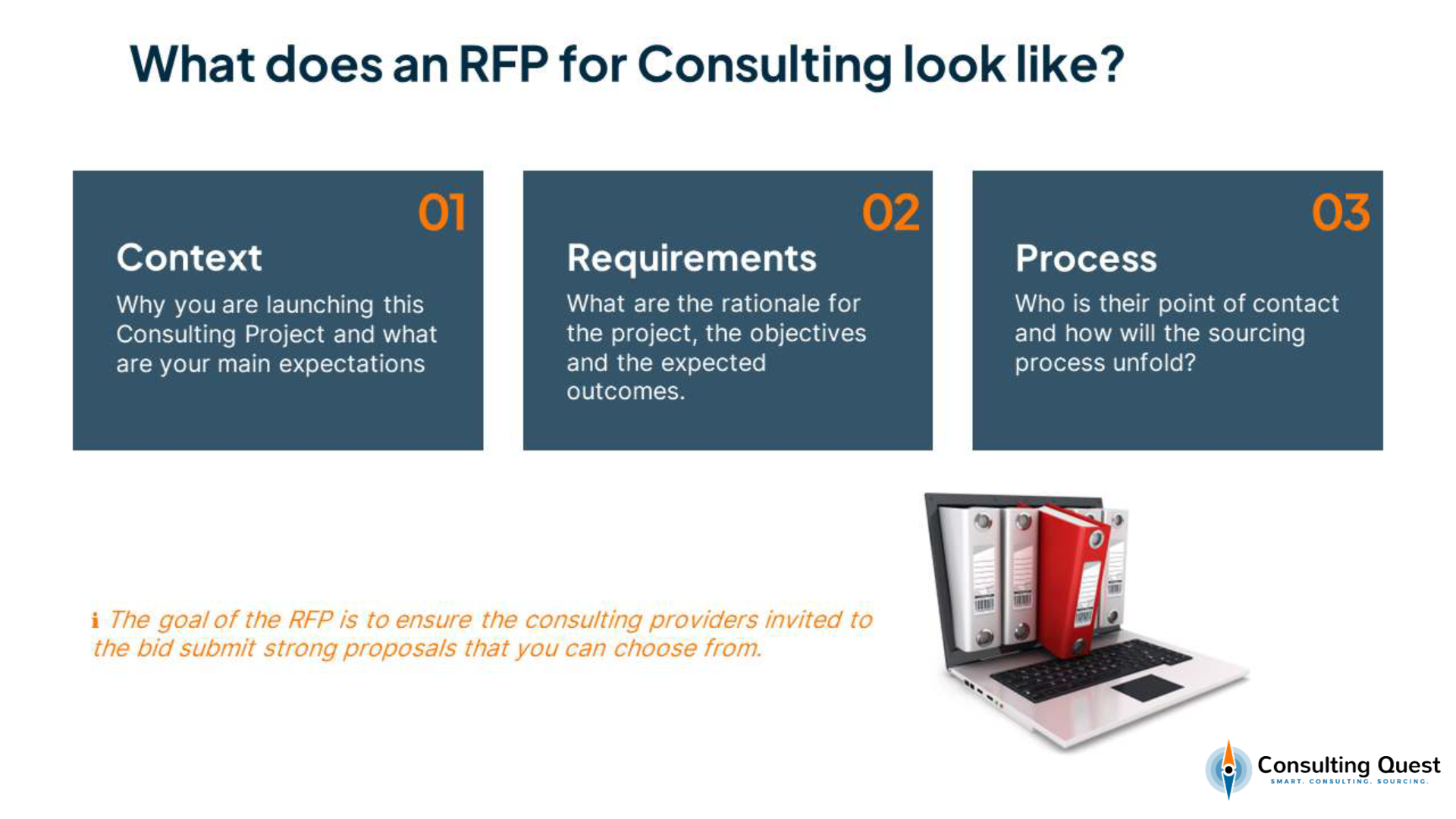
- Os principais elementos de uma RFP para serviços de consultoria são o contexto, os requisitos e o processo.
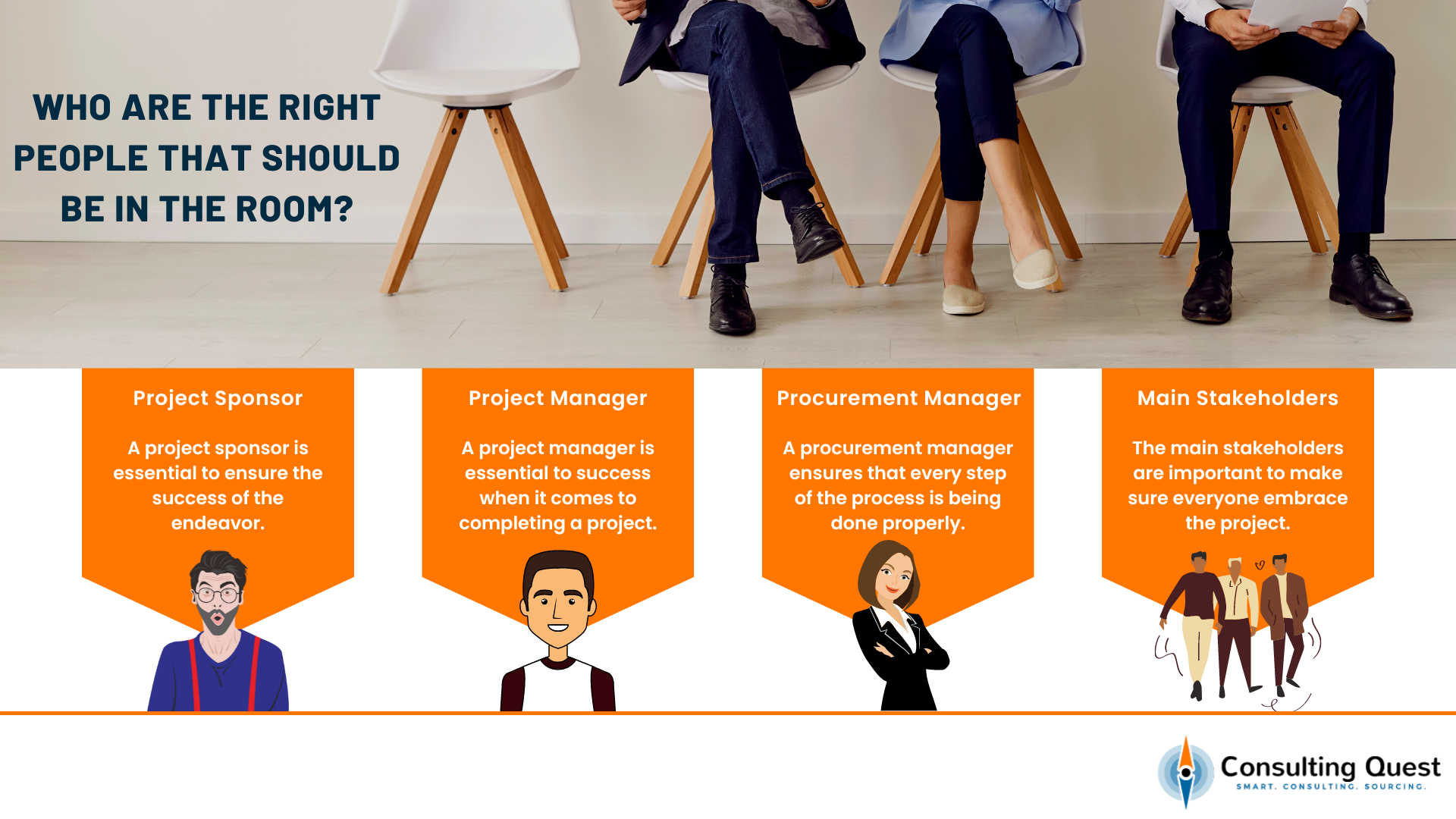
- Mesmo antes de começar o brainstorming sobre o resultado ideal, você precisa garantir que as pessoas certas estejam presentes e isso inclui o patrocinador do projeto, o gerente do projeto, o líder de aquisições e as principais partes interessadas.
- Outros elementos a serem incluídos em sua RFP são: descreva como será o processo de seleção, compartilhe os critérios para a decisão, forneça um cronograma claro, mencione outros requisitos necessários e não se esqueça de fornecer um único ponto de contato.
Uma RFP para serviços de consultoria é um documento que contém todas as informações sobre o projeto, expectativas do cliente e requisitos. É uma parte importante do processo de seleção porque fornece um escopo de trabalho claro para os consultores e os ajuda a decidir se desejam assumir esse projeto específico.
A RFP deve apresentar os objetivos e desafios do cliente em detalhes, assim como fornecer diretrizes sobre como o consultor será compensado e quaisquer outros requisitos específicos.
RFP para Serviços de Consultoria: O Guia Definitivo (2023) oferece aos leitores 8 passos para desenvolver seu próprio RFP para serviços de consultoria para que possam melhorar o ROI de seus projetos de consultoria de forma consistente!
Devo sempre escrever um RFP para Consultoria?
A resposta é simples. Sim, você deve.
Uma solicitação de proposta, ou RFP para consultoria, é um documento que você envia aos consultores para contratá-los. A ideia por trás de uma RFP é ter o maior número de empresas competindo entre si para que possam oferecer suas melhores taxas e oferecer todos os seus serviços.
Antes de elaborar esta proposta, você precisará de algum conhecimento sobre o tipo de trabalho que deseja fazer. Mas para as empresas de consultoria, o interesse em redigir uma RFP vai além da própria concorrência.
A consultoria é um serviço intangível e não é fácil descrevê-lo. Escrever requisitos bem definidos é essencial para todo projeto de consultoria bem-sucedido, mesmo quando não há licitação.
Por que RFP para Consultoria é tão importante?
Se você deseja organizar uma competição justa, uma RFP é a melhor maneira de garantir que todos os licitantes estejam na mesma página. A RFP para consultoria ajuda os consultores a preparar suas propostas com base nos requisitos apresentados pelos clientes em potencial, economizando tempo também!
Além disso, uma RFP fornece informações bem fundamentadas sobre a duração e a complexidade de um projeto, o que facilita a licitação. Além disso, expectativas claras facilitam a comparação das ofertas de forma mais objetiva.
Também é uma maneira fantástica de coletar dados sobre a empresa. É menos essencial quando você trabalha com uma empresa que conhece, pois já sabe o que ela fará. No entanto, trabalhar com uma nova empresa de consultoria é uma excelente maneira de conhecer suas metodologias, referências e recursos.
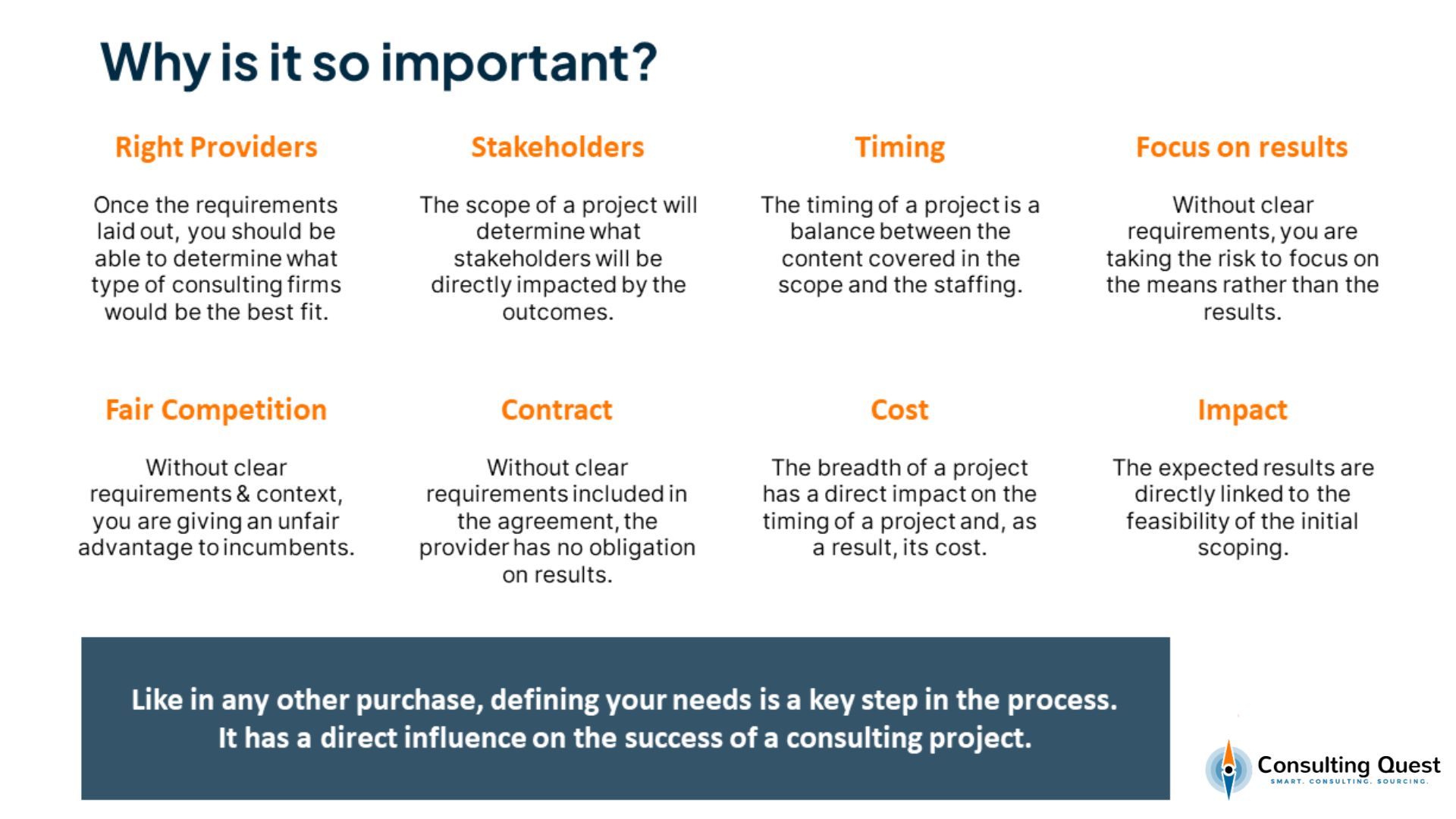
Portanto, essa é uma excelente abordagem para conhecê-los. E pode não resultar em um projeto. No entanto, você os conheceu e talvez acabe trabalhando com eles em outro projeto.
Ele também ajuda a definir o padrão para avaliação de desempenho. Quando você quiser medir o desempenho de uma determinada consultoria durante um projeto, é bom ter definido a expectativa no início para que você tenha algo com o que comparar.
E por último, mas não menos importante, nem todos os projetos são rosas. Às vezes, há um conflito com a empresa de consultoria e você deve se preparar para o pior sempre. Ter algumas expectativas esclarecidas ajudará você a discutir com as empresas de consultoria com alguma base sólida e concreta.
Mas o interesse de um RFP não é apenas sobre o processo de seleção em si
Definir suas necessidades com precisão também pode ajudar a garantir que você compre apenas o que precisa. Nem mais, nem menos. Quando os executivos têm tanta pressão sobre OPEX (despesas operacionais), é vital ficar de olho em seus gastos com consultoria e no impacto de seus projetos.
Além disso, conseguir que as pessoas aceitem e comprem um projeto é um dos aspectos mais desafiadores do gerenciamento de projetos. E tê-los envolvidos no processo de planejamento desde o início ajudará você a obter essa adesão.
Outro benefício é que ele lhe dará uma resposta para um problema que você não esperava. Além disso, se muitas pessoas estiverem na sala e você pedir que se concentrem no problema que deseja abordar, e não nas soluções, os resultados podem surpreendê-lo.
É sempre, sempre uma RFP para consultoria?
Na verdade, não é. E isso vai depender de onde você está no processo de lançamento de um projeto. Digamos que você esteja na fase de ideação e esteja se fazendo essas perguntas. Devo lançar um projeto ou quais são minhas opções para resolver esse problema?
Isso significa que as necessidades e o escopo não são definidos nesse caso, e sua melhor opção é lançar um RFI. É um pedido de informação e você explorará o potencial com as empresas de consultoria. E então você decidirá se deseja ir para a próxima etapa. E o próximo passo é a fase de execução.
E, nesse ponto, sua pergunta seria “Que consultores podem me ajudar a atingir meus objetivos?” Quando suas necessidades e o escopo estiverem claros, você estará pronto para lançar uma RFP para consultoria, mas, na verdade, existem opções intermediárias.
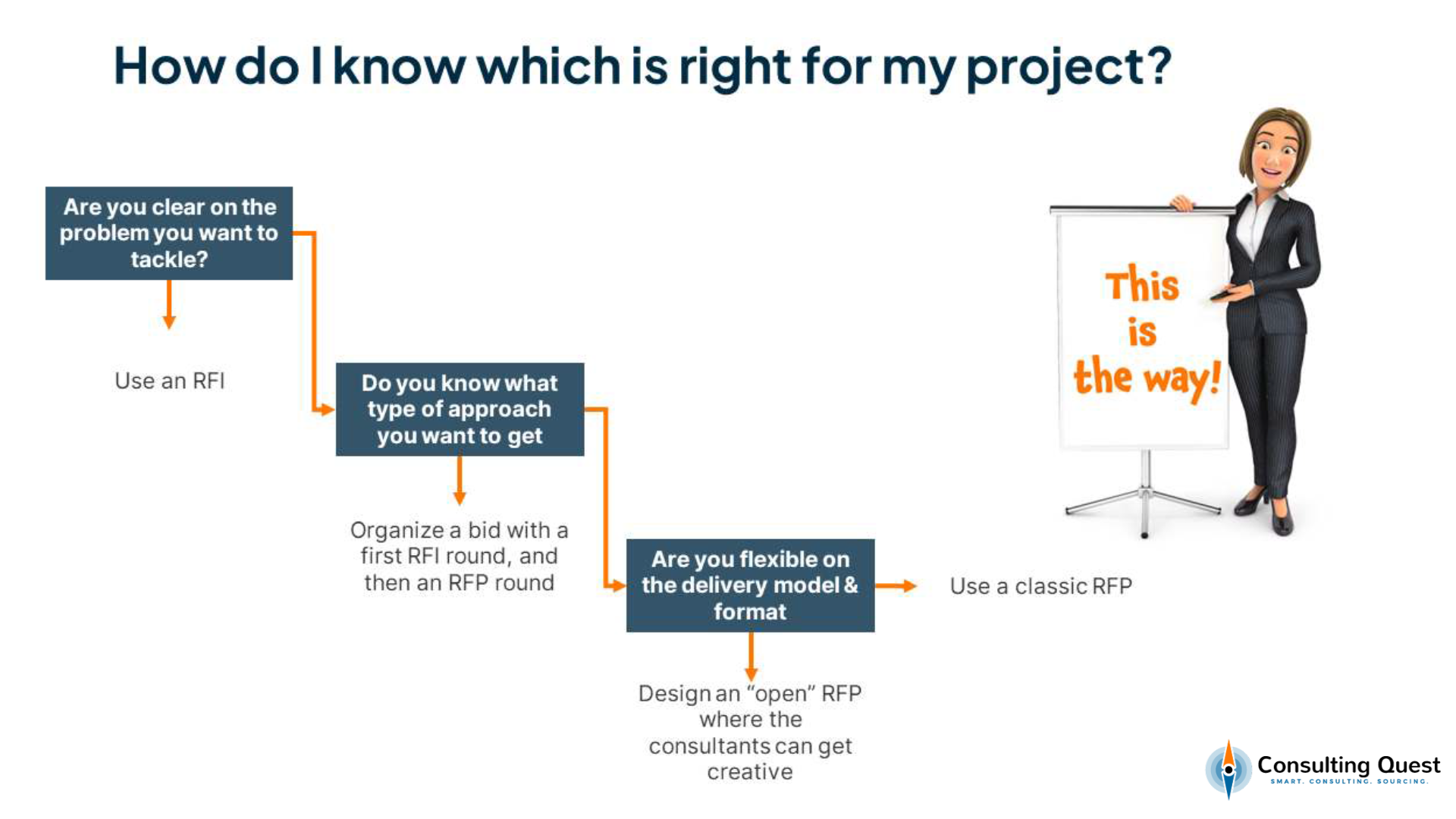
Às vezes, você tem clareza sobre o problema a ser resolvido, mas não sobre a abordagem. Nesse caso, você pode querer usar um processo híbrido, que é misturar o RFI na primeira rodada, por exemplo, e depois um RFP para o processo de consultoria.
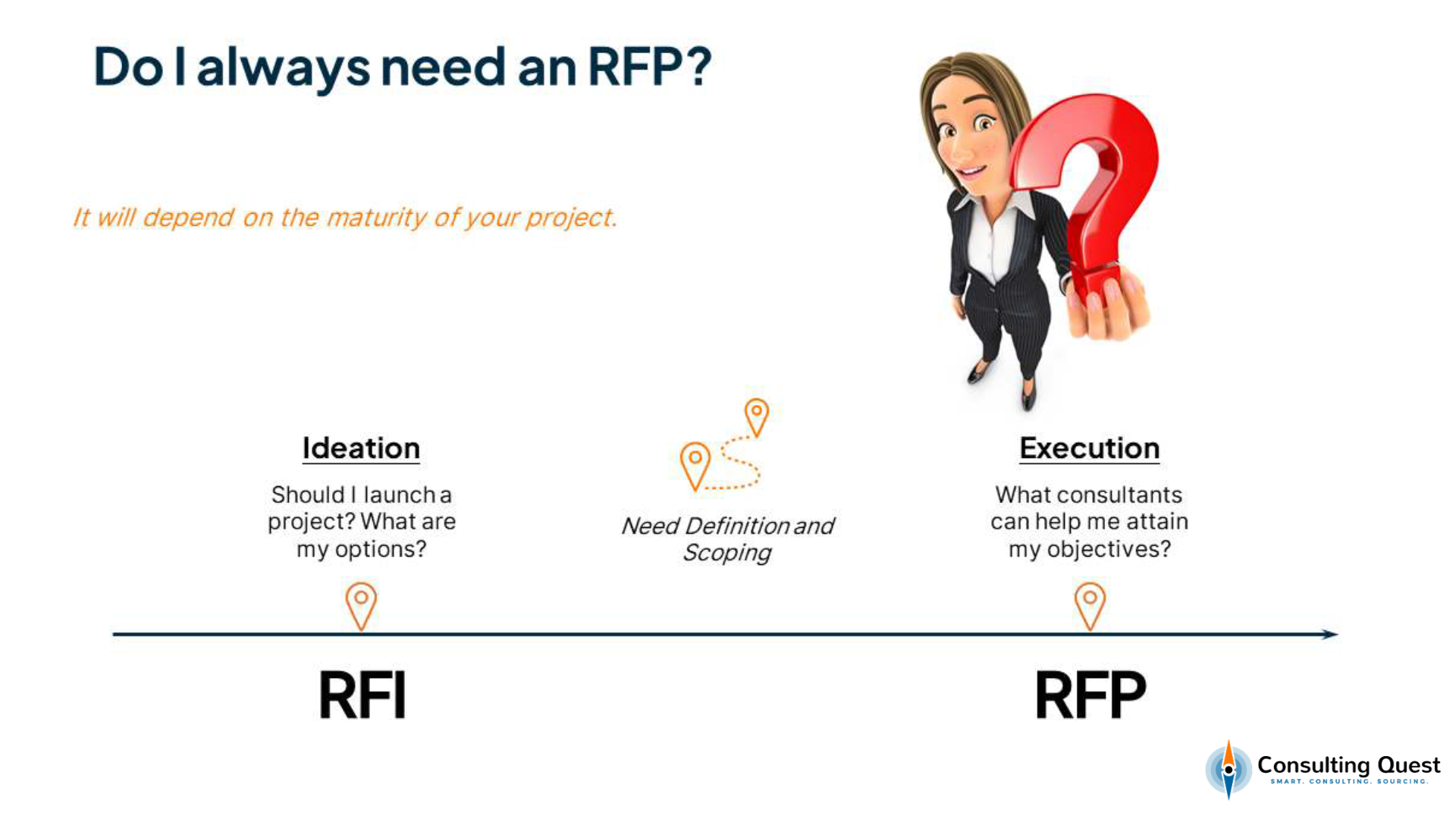
Se você está claro sobre o problema a ser resolvido e a abordagem a ser usada, mas é flexível no modelo de entrega e no formato, então você deve optar por uma RFP aberta onde os consultores podem ser criativos e podem trazer soluções para você.
RFP de Consultoria RFP de Consultoria RFP de Consultoria RFP de Consultoria RFP de Consultoria RFP de Consultoria RFP de Consultoria RFP de Consultoria RFP de Consultoria RFP de Consultoria RFP de Consultoria RFP de Consultoria RFP de Consultoria RFP de Consultoria RFP de Consultoria RFP de Consultoria RFP de Consultoria RFP para Consultoria RFP para Consultoria RFP para Consultoria RFP para Consultoria RFP para Consultoria RFP para Consul
Vamos dar-lhe um exemplo: Em um projeto em que trabalhamos há alguns anos, os clientes queriam implantar uma nova organização, que havia sido definida em outro nível do grupo, em uma das subsidiárias. E eles queriam uma consultoria para ajudá-los a obter a adesão das equipes, definir as interfaces e as novas formas de trabalhar naquele grupo.
Então, selecionamos várias empresas de consultoria e uma delas propôs projetar um jogo onde os jogadores e todos os stakeholders representassem seus futuros papéis e definissem essas novas interfaces.
Não foi algo que foi pedido pelo cliente quando fizemos a RFP para consultoria, mas é a empresa que eles trabalharam e teve muito sucesso.
Então, isso significa que, quando você deixa espaço para a criatividade, pode acabar com algo em que não pensou, mas que na verdade é muito eficaz para todos os seus projetos.
O que isso realmente significa para o processo de sourcing?
Isso significa que você precisa de mais colaboração. Você precisa envolver o patrocinador do projeto, o líder do projeto, o líder de aquisições e as principais partes interessadas para realmente obter a adesão que discutimos anteriormente.
Mas também é importante ter uma compreensão clara do problema que você está tentando resolver. Esse entendimento deve vir tanto do patrocinador quanto dos líderes do projeto. Além disso, também é crucial estar familiarizado com as políticas de compras definidas pela equipe de compras.
Quando você trabalha em um projeto maior ou estratégico, deve adicionar alguém da estratégia e alguém das finanças. Mas isso significa que é um pré-requisito para eu implementar o gerenciamento de demanda e a estratégia de fazer ou comprar.
Porque se você não tem clareza do escopo do projeto, não tem como estimar o orçamento e vai ser muito difícil avaliar o quão estratégico ele é. E também significa que a aquisição deve esclarecer a expectativa de uma RFP.
Eles precisam que você tenha clareza sobre quais elementos eles querem encontrar nele, quão detalhado deve ser e que parte específica pode depender do tamanho ou do valor estratégico de um projeto.
Também deve ficar claro quais são as etapas que você seguirá ao definir uma RFP e também quais são as funções e responsabilidades dos diferentes participantes na criação da RFP.
Então, você vê que escrever a RFP para consultoria não é apenas uma atividade de aquisição pura. É claro que é o primeiro passo para assumir o controle de seus gastos com consultoria, mas também uma boa maneira de aumentar as colaborações e obter a adesão das diferentes partes interessadas no início de um projeto.
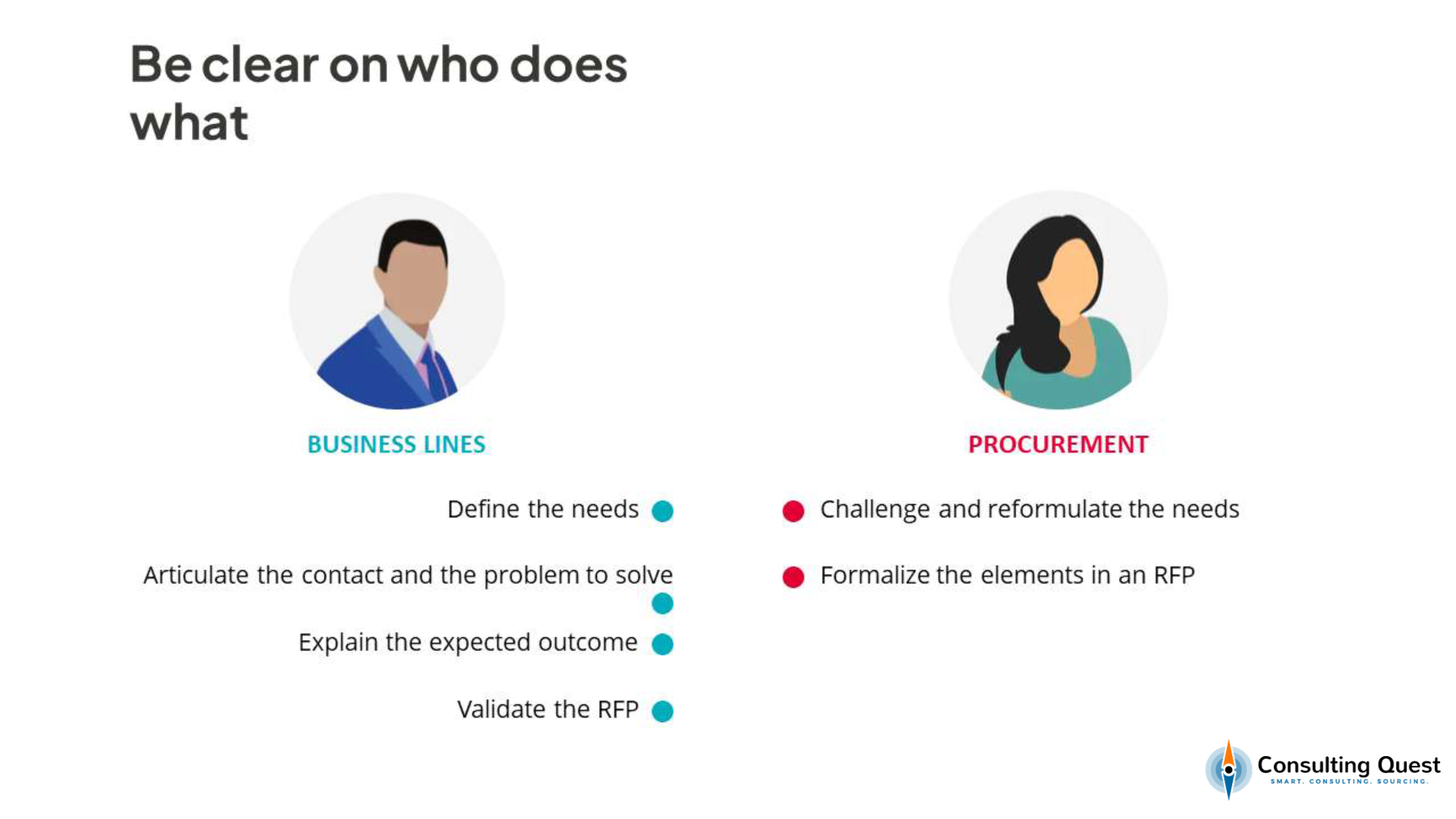
Isso vai te ajudar a melhorar o relacionamento com as consultorias porque você agrega transparência e clareza no relacionamento, e também ajuda o procurement a melhorar sua credibilidade para a categoria de consultoria junto ao público interno.
Portanto, é uma parte muito importante do processo de aquisição e RFP para serviços de consultoria. E, novamente, isso é um exercício que você deve fazer para cada projeto.
O que torna um RFP eficiente para consultoria?
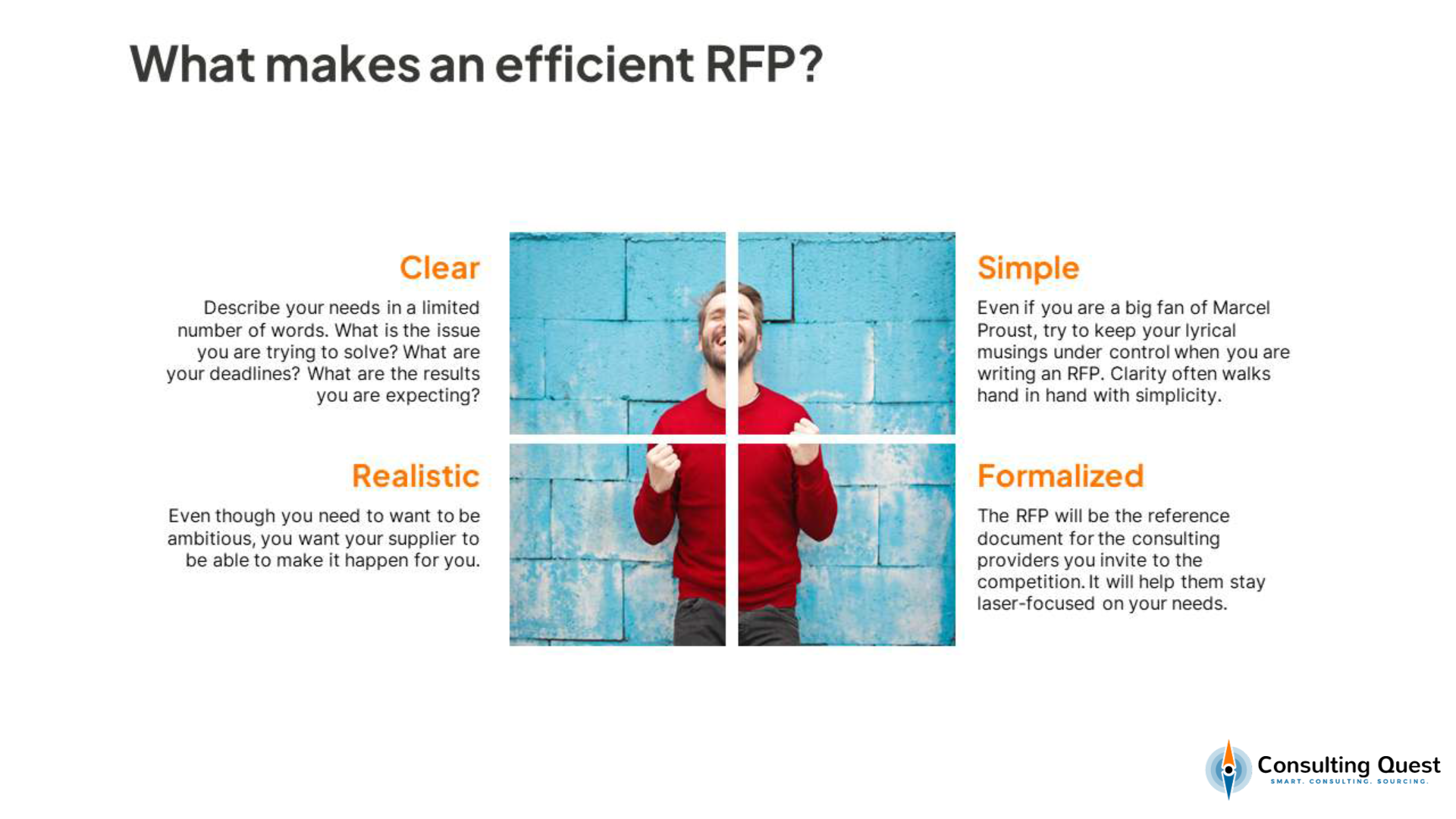
Uma RFP eficiente para consultoria deve ser bem estruturada, clara e concisa para comunicar com eficácia seus requisitos a possíveis empresas de consultoria. Aqui estão alguns elementos-chave que tornam uma RFP eficiente:
Tenha em mente o que faz um ótimo RFP para consultoria
O fim do jogo, ao redigir uma RFP para consultoria, é maximizar as chances de sucesso de sua compra. Você quer ter certeza de que receberá propostas sólidas de seus fornecedores pré-selecionados para que possa escolher o melhor para você.
Isso significa que você precisa transmitir suas necessidades em um documento curto de forma eficiente. Existem alguns princípios básicos ao escrever uma RFP para consultoria, independentemente do tipo de bens ou serviços que você deseja adquirir.
Seja claro.
É talvez o elemento mais importante de uma RFP para consultoria. Você precisa descrever suas necessidades em um número limitado de palavras. Qual é o problema que você está tentando resolver? Quais são os seus prazos? Quais são os resultados que você espera?
Se você não tiver certeza do que realmente precisa, poderá organizar internamente um pequena workshop com os principais stakeholders. Você também pode usar um processo de RFI para ter uma noção do que pode ser feito.
"Nada é tão simples que não possa ser mal entendido" - Freeman Teague Jr
Mantenha simples.
Mesmo que você seja um grande fã de Marcel Proust, tente manter suas reflexões líricas sob controle quando estiver escrevendo uma RFP. A clareza muitas vezes anda de mãos dadas com simplicidade.
Você também deve estar ciente de que muitos consultores não são falantes nativos de inglês. Mesmo um orador proficiente pode ter dificuldades com uma estrutura complicada ou um vocabulário sofisticado.
Além disso, você terá a oportunidade de entrar em mais detalhes durante o briefing dos fornecedores pré-selecionados.
"Simplicidade é subtrair o óbvio e acrescentar o significativo" - John Maeda
Estabeleça metas realistas.
Mesmo que você queira ter grandes objetivos e seja muito ambicioso, também deseja que seu fornecedor seja capaz de alcançá-los para você. Se você não tiver certeza sobre o que realmente pode ser realizado, não hesite em iniciar uma primeira rodada de discussão com fornecedores em potencial usando uma solicitação de informações (RFI).
"O objetivo que você estabelece deve ser um desafio. Ao mesmo tempo, deve ser realista e alcançável, não impossível de ser alcançado". - Rick Hansen
Visualize o Processo como Buscando Soluções
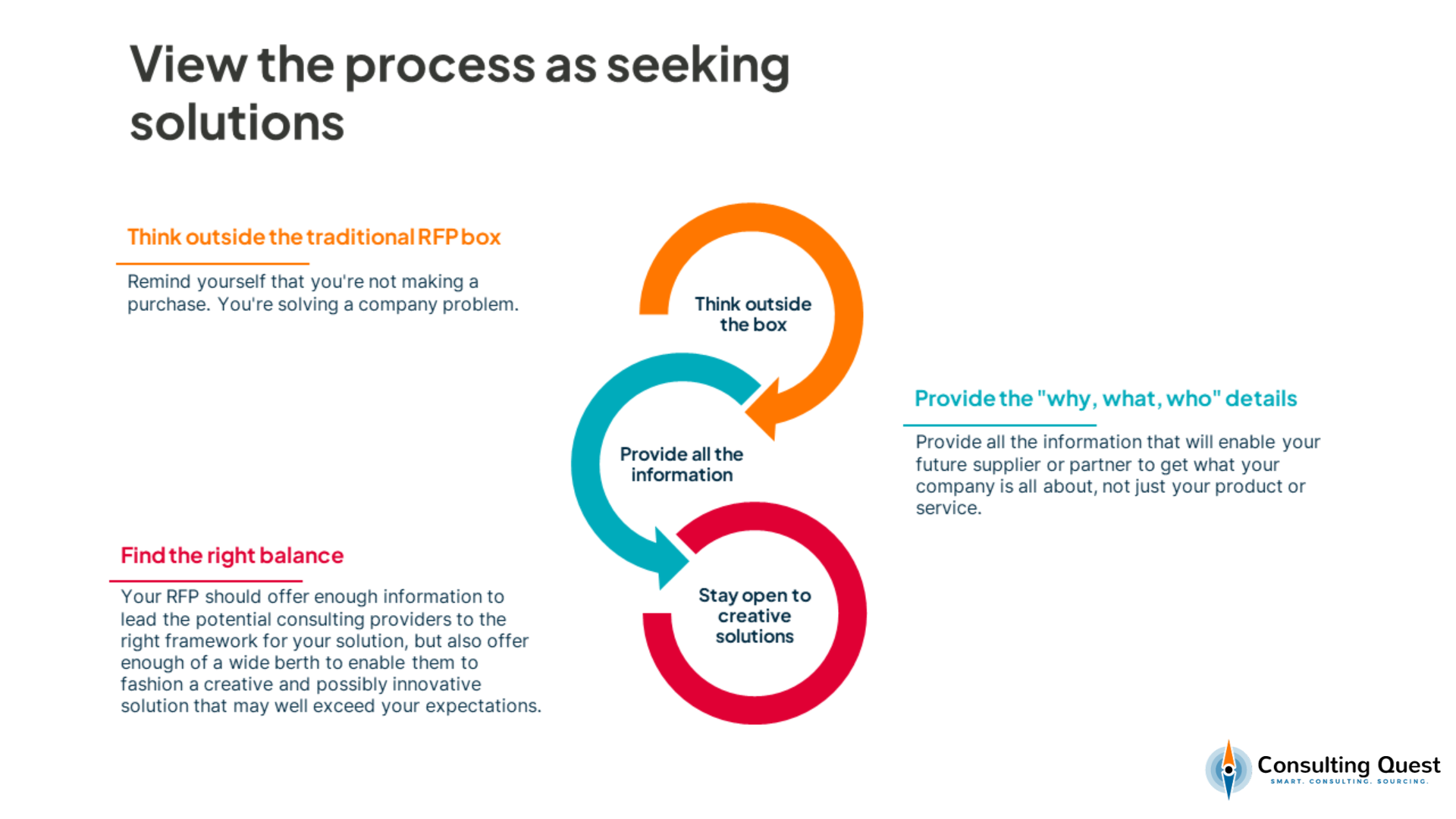
Pensar fora do RFP tradicional para a caixa de consultoria começa lembrando a si mesmo que você não está fazendo uma compra. Você está resolvendo um problema da empresa.
Forneça todas as informações - os detalhes "por que, o quê, quem" - que permitirão que seu futuro fornecedor ou parceiro entenda o que é sua empresa, não apenas seu produto ou serviço. Descreva em detalhes sua necessidade para o projeto e como você pensa atualmente sobre o escopo.
Em meio ao ritmo acelerado da inovação e dos avanços tecnológicos, sua RFP para consultoria tem um novo papel a desempenhar: uma oportunidade de adquirir algo além do que você tinha em mente - uma solução que pode ir além do que simplesmente preenche sua necessidade atual.
Vamos pensar um pouco e imaginar que a Apple, por exemplo, lançou uma RFP para um novo tipo de iPhone que era significativamente menor, mas repleto de recursos. Podemos imaginar o retorno de uma proposta apenas para um iPhone com uma polegada quadrada e que cabesse melhor no bolso porque a RFP restringia o escopo do produto solicitado a um tipo de iPhone.
Agora vamos nos permitir imaginar que a Apple tenha lançado uma RFP para um novo dispositivo sem nenhuma especificação além de que ele deveria se encaixar na marca Apple. Nesse cenário mais aberto, torna-se possível propor um relógio de pulso que inclua recursos do iPhone e muito mais – um produto além do que os executivos da Apple podem ter em mente.
Então, lá vai você. Sua RFP deve oferecer informações suficientes para levar os fornecedores de consultoria em potencial à estrutura certa para sua solução, mas também oferecer um espaço amplo o suficiente para permitir que eles criem uma solução criativa e possivelmente inovadora que pode exceder suas expectativas.
Procure compreensão, habilidade e ajuste
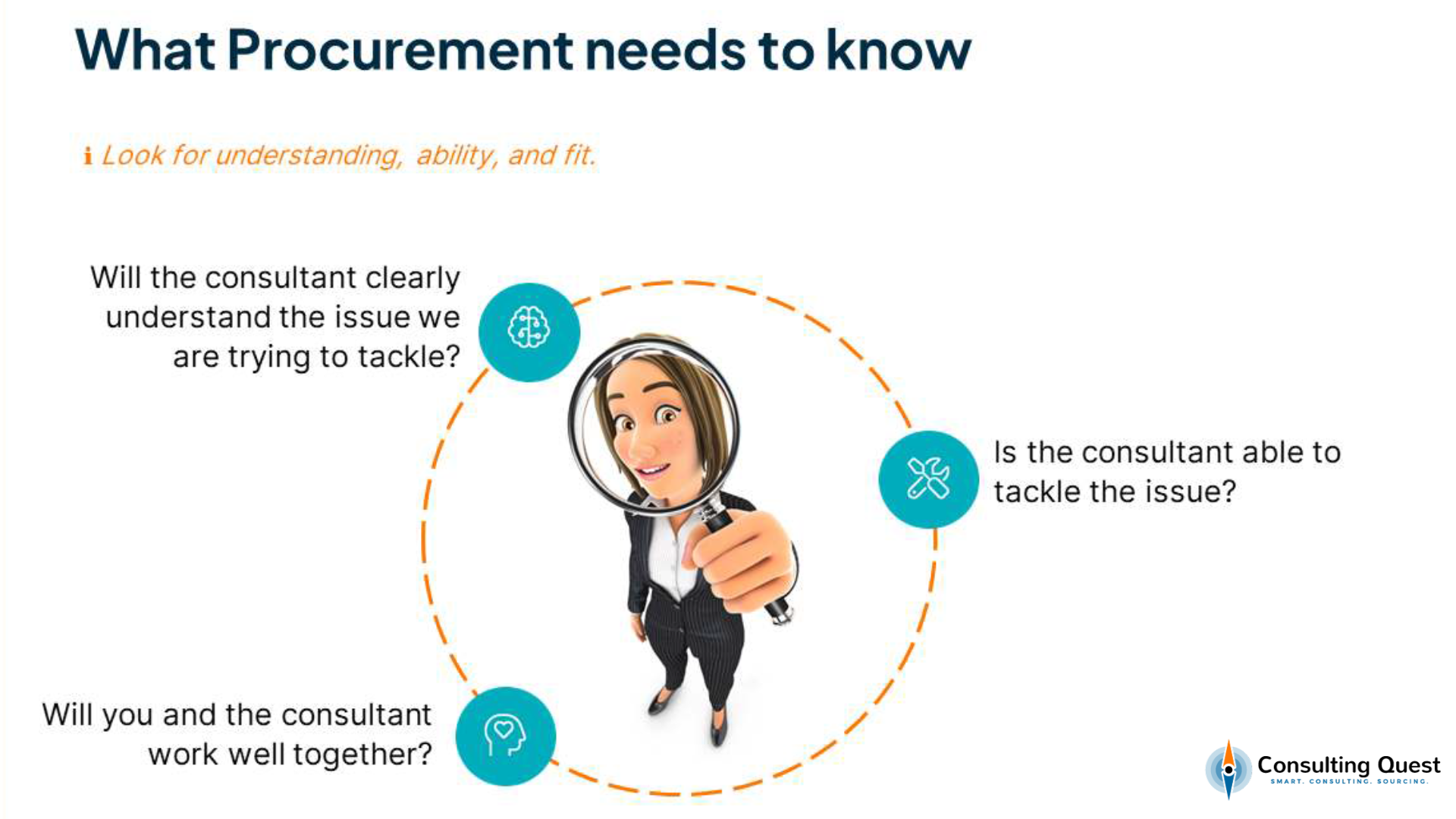
Depois de aplicar esses princípios sólidos à sua RFP para consultoria, você pode examinar as perguntas que devem ser respondidas para um projeto de consultoria:
- O consultor entenderá claramente o problema que estamos tentando resolver?
- O consultor é capaz de resolver o problema?
- Você e o consultor irão trabalhar bem, juntos?
Como você pode ver, isso parece bastante simples, certo? Então, vamos para a ação.
Quais são os principais elementos de uma RFP para serviços de consultoria?
O Contexto
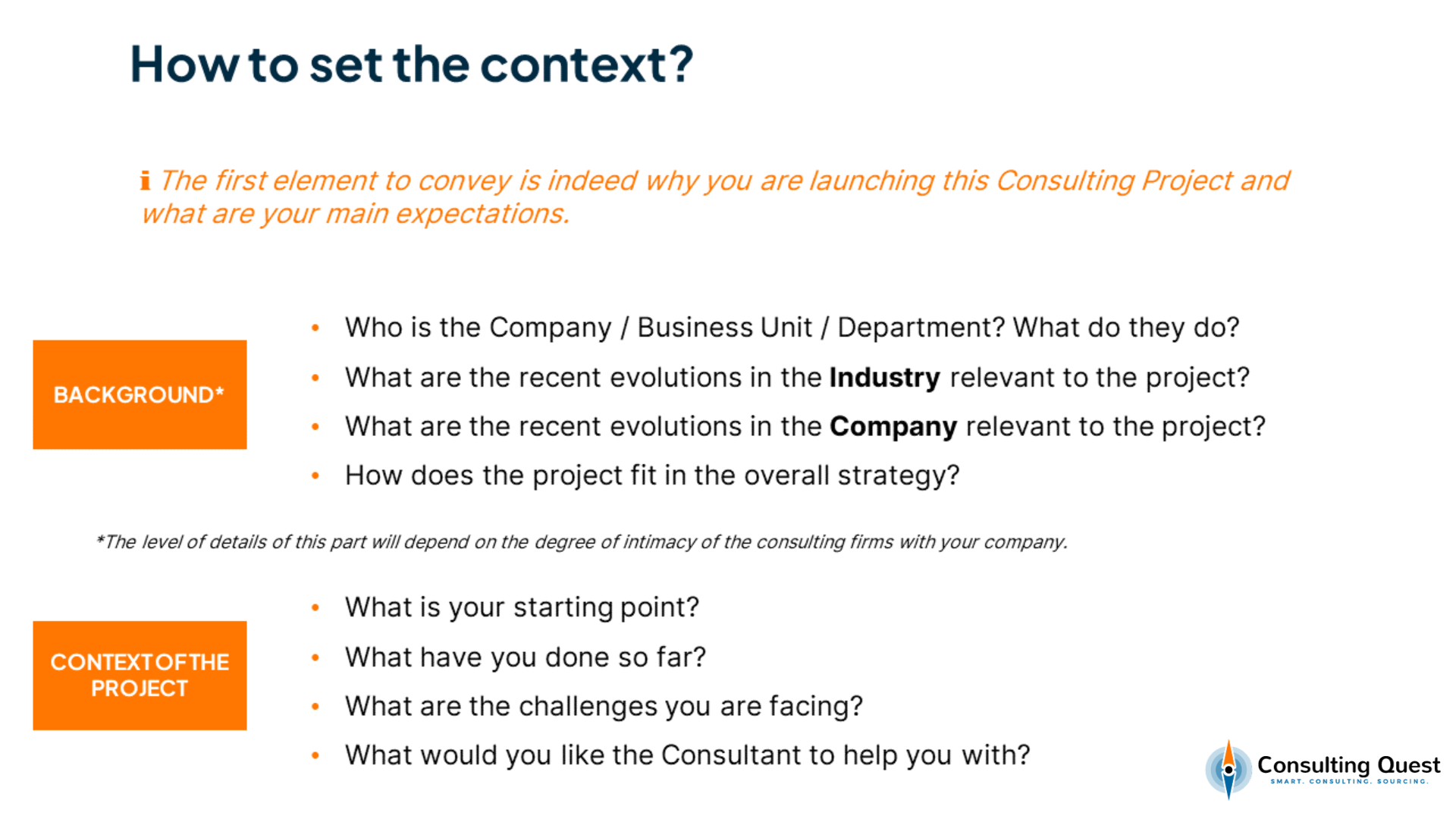
Por que você está lançando este projeto de consultoria e quais são suas principais expectativas?
Os requisitos
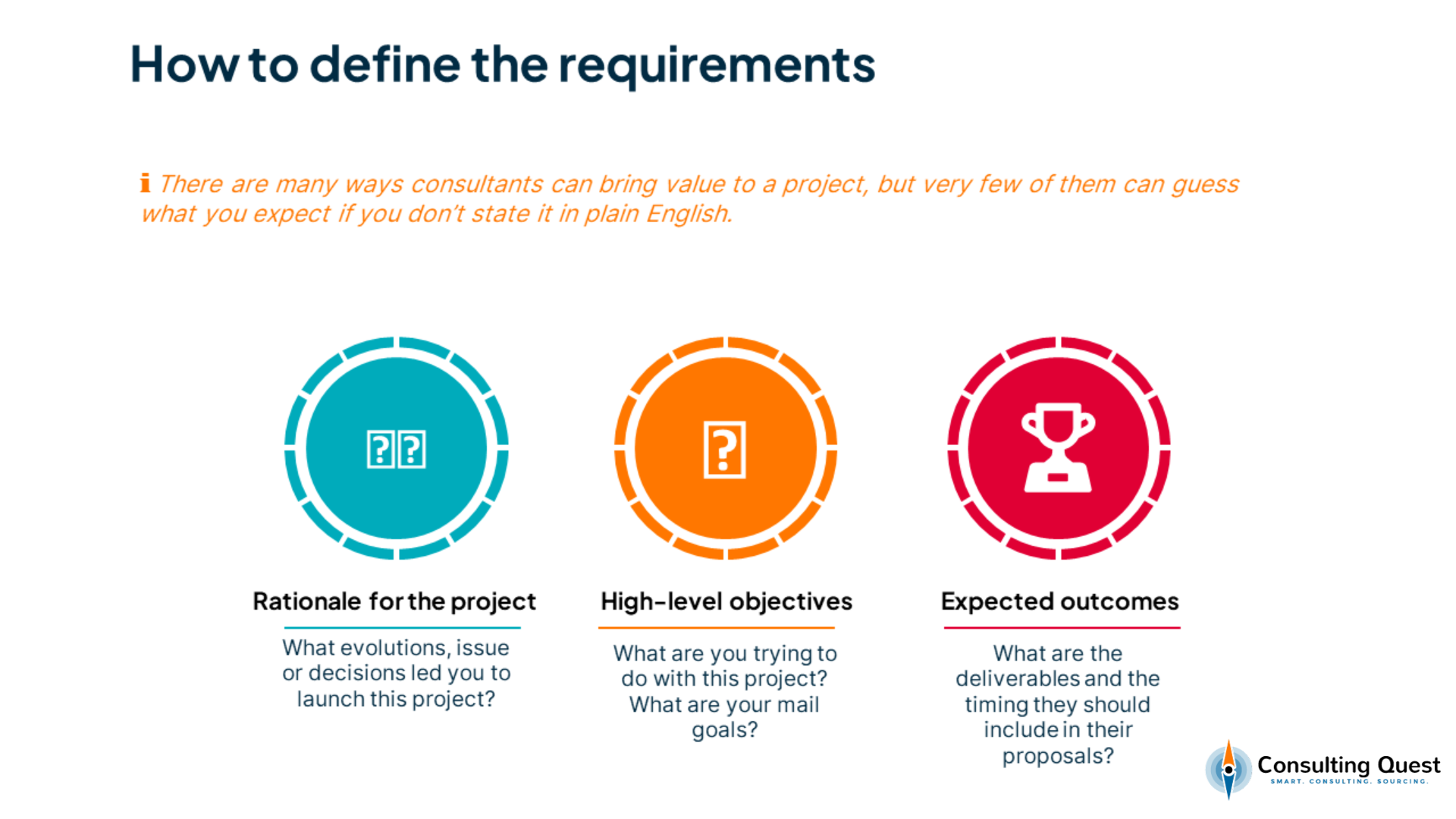
Qual é a justificativa para o projeto, os objetivos e os resultados esperados?
O processo
Quem é o ponto de contato e como será o processo de sourcing?
Quais são os pré-requisitos antes de escrever uma RFP para um projeto de consultoria?
Mesmo antes de começar o brainstorming sobre o resultado ideal, você precisa ter certeza de que as pessoas certas estão na sala. Agora dependendo da magnitude do projeto, você pode adaptar o tamanho da sua equipe. No entanto, aqui estão alguns papéis que precisam estar na mesa:
O Patrocinador do Projeto
O patrocinador do projeto é a pessoa (geralmente um gerente ou executivo) que será responsável pelo projeto. Ela ou ele garantirá que o projeto forneça os resultados esperados e defenderá o projeto para “vendê-lo” dentro da equipe do projeto e da organização. Ela ou ele também será o presidente do Comitê Diretor.
Evidentemente, o patrocinador do projeto tem a autoridade certa e o nível de tomada de decisão para conduzir o projeto de forma eficaz. Ela ou ele também é diretamente afetado pelos resultados do projeto.
Normalmente, o patrocinador do projeto é o dono do orçamento. No entanto, em algumas empresas, os orçamentos de consultoria são centralizados sob a direção do CEO, Finanças ou Estratégia. Neste caso, talvez você queira convidar o dono do orçamento também para a festa.
O Gerente de Projeto
O Gerente de Projeto é a pessoa que tem a responsabilidade diária do projeto. Ela ou ele orientará os consultores para garantir que eles trabalhem nas condições certas com as equipes e entreguem os resultados esperados no prazo.
Ela ou ele muitas vezes faz parte da equipe do patrocinador do projeto e é impactado diretamente pelo projeto.
O Líder de Compras
A menos que você esteja trabalhando em um projeto muito pequeno e já tenha uma lista de fornecedores potenciais em mãos, você deseja ter alguém da área de compras na sala. Encontrar os candidatos certos pode levar algum tempo e, às vezes, é útil começar no início do processo.
Além disso, os gerentes de compras são hábeis em determinar requisitos e criar propostas, o que normalmente não é o caso de outras pessoas na organização. Eles podem facilitar seu trabalho e fornecer assistência durante todo o processo.
Muitas empresas, no entanto, não têm massa crítica para ter alguém dedicado à consultoria de compras. Nesse caso, você pode incluir o responsável pelas compras indiretas ou o chefe de compras em sua equipe.
As principais partes interessadas
Afirmamos anteriormente que o patrocinador e o gerente do projeto frequentemente estão na mesma equipe. No entanto, eles podem não ser os únicos afetados pelo projeto.
Pergunte a si mesmo se você deve esperar um forte impacto ou uma mudança profunda nas interfaces com outra parte da organização. Se for esse o caso, pode ser uma boa ideia envolva seus principais stakeholders na fase de requisitos.
Suponha que seu projeto seja muito grande, como um projeto de transformação em toda a empresa. Nesse caso, você também pode querer envolver finanças e estratégia para garantir que estejam alinhados com a estratégia geral.
Quando você tiver a equipe certa no trabalho, você pode começar a fazer o brainstorming.
Como definir as expectativas do seu projeto?
Há muitas maneiras pelas quais os consultores podem agregar valor a um projeto, mas muito poucos deles podem adivinhar o que você espera se não o declarar em linguagem simples. A melhor maneira de começar é reformular a declaração do problema no início desta seção.
Lembre as empresas de consultoria incluídas na RFP para o processo de consultoria sobre quais são os objetivos, bem como os resultados esperados. Se você tem expectativas específicas em relação aos benefícios, provavelmente agora é um bom momento para expressá-las.
O objetivo de alto nível pode ser claramente definido em poucas linhas. No entanto, muitas estradas, se não todas, levam a Roma. Pode ser necessário adicionar algumas precisões sobre o escopo, o nível de confidencialidade, quem deve estar envolvido do seu lado e o cronograma do projeto.
Há um bom equilíbrio a ser encontrado quando você descreve os resultados esperados. Algumas empresas tendem a descrever ao mesmo tempo o quê e o como. Entretanto, assim que você começa a descrever como a empresa de consultoria deve produzir os produtos, você perde a criatividade e a experiência que um fornecedor externo pode trazer.
Você reduz automaticamente a empresa de consultoria a uma força de trabalho terceirizada. Isso pode ser bom se você tiver uma compreensão clara do trabalho que precisa ser feito, mas não é considerado a melhor maneira de abordá-lo.
Nossa experiência mostra que, mesmo que você se sinta tentado a especificar a metodologia, é importante deixar espaço para que os consultores proponham como abordariam a questão.
Isso não impede ajustes posteriores e, na maioria das vezes, fornece uma nova perspectiva. O objetivo do projeto é identificar as melhores oportunidades de investimento para a NewsCo na cadeia de valor da região.
Fase 1: Enquadramento
- Cenário de alto nível da cadeia de valor
- Definição da metodologia de priorização de alto nível para NewsCo
- Identificação das melhores oportunidades para a NewsCo, impulsionando o "outside-in benchmark" de outras instalações no mesmo campo, incluindo atratividade econômica e fatores-chave de sucesso (identificação onde jogar e as condições associadas para vencer)
- Seleção de oportunidades prioritárias a serem analisadas mais detalhadamente na fase 2
- Possíveis alvos/operadorew para se associar e/ou fazer M&A
Fase 2: Aprofundamento em oportunidades selecionadas
Agrupamento de oportunidades em opções de cenários potencialmente acionáveis, dependendo do nível de recursos e do retorno esperado (definição de como chegar lá e vencer)
- Plano de Negócios de Alto Nível para as opções selecionadas
- Análise da Estratégica de Marketing
- Top-Line e Margins Potencial
- Requisitos de recursos (investimentos, matérias primas, ...)
- Estratégia de fabricação/parceria
- Plano Diretor de Longo Prazo para NewsCo
Não hesite em acrescentar informações adicionais que poderiam ser implícitas para você, mas que as empresas menos familiarizadas com você não podem prever:
- Você espera que o consultor faça tudo sozinho ou espera uma equipe compartilhada?
- O trabalho será realizado no local?
- Existe um local preferido? Exigências específicas de idioma talvez?
- Você tem demandas específicas em relação à transferência de conhecimento na conclusão do projeto?
- Existem questões adicionais que devem ser abordadas?
“Temos um problema específico de integração cultural em uma fábrica localizada no lado chinês da fronteira entre a Coreia e a China. A compreensão de ambas as culturas é fundamental. O idioma mandarim é um diferencial.”
Nesta fase, vamos nos colocar no lugar da empresa de consultoria. O contexto é claro e os objetivos e entregas tomaram forma. Agora a questão chave é ser selecionado para o projeto.
Descrever como pretende proceder no processo de seleção é fundamental para garantir um processo justo e garantir que as empresas decidam participar.
Como descrever o contexto de sua atribuição?
O que você deseja transmitir nesta seção é por que está lançando este projeto de consultoria e quais são suas principais expectativas. Como mencionamos anteriormente, não hesite em se envolver em algumas conversas com empresas de consultoria antes de emitir a RFP para consultoria para aprimorar suas opiniões sobre o projeto progressivamente.
Não é incomum perceber, quando você começa a explicar suas necessidades, que está realmente adotando um escopo muito grande ou que o projeto pode realmente ser dividido em partes menores.
O contexto deve fornecer uma visão geral de alto nível do problema. Então, comece dando o básico. Qual é o estado da sua indústria? Quais são os principais desafios que você está enfrentando? O que você fez até agora? Em que você gostaria que o consultor o ajudasse?
“O lento crescimento econômico na Europa, em particular, em comparação com outros mercados, limitou o crescimento da indústria de seguros. Após um ligeiro aumento em 2017, o crescimento voltou a cair em 2018.
Em 2016, novos regulamentos europeus, nomeadamente Solvência 2, começaram a ser implementados. Como resultado, a pressão sobre as funções de risco e conformidade aumentou significativamente. A política europeia também pode impactar a postura regulatória nos principais mercados.
Como resultado, o risco está se tornando mais do que nunca uma função central na organização. As seguradoras precisam ajustar os processos e estratégias de negócios a esse novo ambiente. Em 2017, a Insurance Co. criou uma equipa de Risco e Conformidade ao nível do grupo para supervisionar a implementação do Solvência 2 nas diferentes unidades de negócio.
A Insurance Co. gostaria de revisar agora as várias opções para organizar suas atividades de risco no nível corporativo e da unidade de negócios e identificar a configuração mais eficiente, levando em consideração a posição dos reguladores sobre esse assunto crítico.”
À primeira vista, parece um simples projeto de design organizacional. No entanto, se você olhar mais de perto, alguns elementos-chave parecem estar faltando.
- O contexto não dá nenhuma informação sobre os resultados da equipe de Risco e Conformidade existente. Por que a equipe corporativa quer reorganizar a função de risco apenas dois anos após a criação da equipe?
- Não há menção à dimensão política da relação corporativa com as unidades de negócios, que muitas vezes é um elemento chave em um projeto de organização.
- Também pode ser interessante fornecer alguns benchmarks sobre os modelos existentes e antecipar a posição do regulador.
Todos estes elementos ajudarão os consultores a entender exatamente onde você está no caminho do sucesso e a projetar uma proposta personalizada para suas necessidades.
Você também pode definir as perguntas de alto nível que deseja responder com o projeto:
As seguintes questões estruturantes devem ser abordadas:
- Qual é o desempenho existente da instalação industrial? Como nos comparamos com os concorrentes?
- Quais são os profissionais de alta e baixa performance, por função?
- Quais são as diferentes oportunidades para harmonizar a estrutura organizacional?
- Quais são as melhores opções para melhorar a eficiência da organização com base em um benchmark interno?
- Para cada opção, qual seria o impactos/riscos a se considerar? Os custos associados e os possíveis benefícios?
Uma primeira avaliação de alto nível mostra um potencial de 7% de economia que contribuirá para o objetivo geral de sinergia da fusão.
Uma vez definido o contexto, você pode passar para a descrição de seus requisitos para o projeto. Lembre-se de integrar ao seu RFP as perguntas que as empresas de consultoria fariam para poder fornecer uma solução adaptada às suas necessidades.
Você pode usar um sparring ou outro membro de sua equipe para revisar e garantir que o contexto seja claro e preciso.
Por que é importante apresentar sua empresa em uma RFP para serviços de consultoria?
Dependendo do seu grau de familiaridade com empresas de consultoria, você pode fornecer mais informações sobre sua empresa, sua unidade de negócios ou seu departamento e como ele se encaixa no esquema geral das coisas.
Pode ser uma boa forma de nivelar o terreno ao introduzir novos jogadores na competição. Compreender o histórico de uma empresa é fundamental para que os consultores identifiquem potenciais projetos e clientes comparáveis em sua experiência anterior.
Você pode começar com uma apresentação de alto nível de sua empresa, incluindo sua indústria, sua presença, um pouco da história de sua empresa, bem como parte de suas finanças. O objetivo desta seção é dar uma visão geral do seu negócio aos consultores.
“A Insurance Co. é líder mundial em seguradoras de bens pessoais e acidentes na Europa, atendendo a mais de 25 milhões de famílias. Fundada em 1920, a Insurance Co. tem se dedicado a proteger nossos clientes das incertezas da vida e prepará-los para o futuro por quase 100 anos.
Com sede na Alemanha, a Insurance Co. está presente em aproximadamente 15 países em toda a Europa e gerou cerca de $150B em ativos totais no ano de 2019.”
Seu próximo passo é descrever sua empresa e/ou seu departamento. Você precisa incluir todas as informações que possam ser relevantes para o projeto, como sua pegada, sua organização, suas linhas de subordinação, etc.
“O Global Direct Procurement é o departamento responsável pelas operações de compras diretas no nível do grupo. Ele obtém todas as matérias-primas usadas em mais de uma unidade de negócios do grupo, bem como descreve e gerencia as políticas de aquisição para todas as atividades de aquisição direta dentro ou fora do grupo Global Direct Procurement. O grupo é composto por 30 funcionários, a maioria baseados na Alemanha.”
Por fim, se for relevante, você pode compartilhar algumas de suas ambições estratégicas para o futuro para ajudar os consultores a entender como o projeto se encaixa em sua estratégia geral.
Quais são os outros elementos a serem incluídos em sua RFP para consultoria?
Descrever como o processo de seleção se desenrolará
Primeiro, vamos começar explicando as principais etapas do processo de consultoria. É importante que os candidatos consultados entendam quanto tempo eles têm para preparar e enviar sua proposta. Também lhes dará uma ideia de quando o projeto pode começar.
Normalmente, neste ponto, você deve ter assinado um acordo de não divulgação (NDA) com os candidatos em potencial. Mesmo que esta etapa não seja obrigatória, recomendamos que você proteja sua confidencialidade.
As principais etapas da RFP para projeto de consultoria são (ver imagem abaixo):
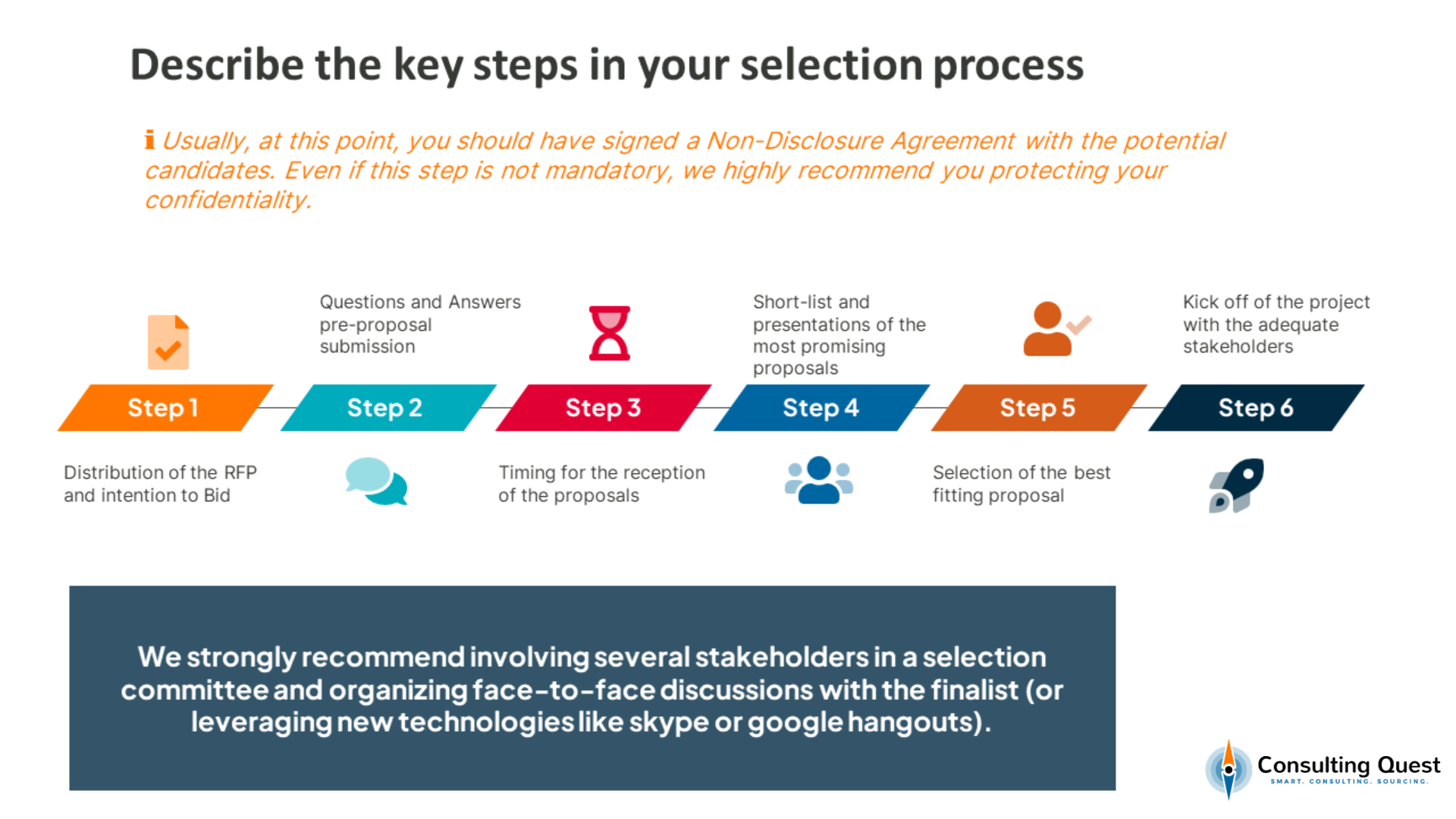
Como você pode ver no cronograma acima e mesmo que não se trate de escrever uma RFP para consultoria em si, recomendamos enfaticamente envolver várias partes interessadas de sua empresa como um comitê de seleção e organizar discussões face a face com o finalista (ou alavancar novas tecnologias como Skype ou Google Hangouts).
Então, vamos dar uma olhada no conteúdo da proposta. Para permitir comparações adequadas, não hesite em especificar em sua RFP para consulta algumas expectativas sobre o que a proposta do consultor deve incluir.
“O conteúdo da proposta deve incluir uma descrição dos objetivos perseguidos, a abordagem e as entregas, o planejamento do projeto destacando os principais marcos, bem como a estrutura de gerenciamento do projeto proposta (incluindo a contribuição exigida do cliente).
Para demonstrar sua competência, a empresa de consultoria deve fornecer referências sobre projetos similares (indústria/capacidade), os currículos dos consultores reais que devem trabalhar no projeto e exemplos de Thought Leadership que eles produziram no campo.
As taxas e a carga de trabalho devem ser detalhadas o suficiente para permitir uma compreensão clara da estrutura de custos associada ao projeto.”
Por fim, você deve descrever como será organizado o Q&A entre o envio da RFP para consultoria e o recebimento da proposta. Quando a pergunta deve ser enviada? Como as respostas serão compartilhadas com os provedores de consultoria? E assim por diante.
Compartilhe os critérios para a decisão
Os critérios de seleção e as expectativas para a proposta devem ser explícitos. Em princípio, você já sabe como fará a seleção. Se não, bem, esse é o momento certo para pensar nisso.
Os critérios de seleção geralmente são uma mistura de (veja a imagem abaixo):
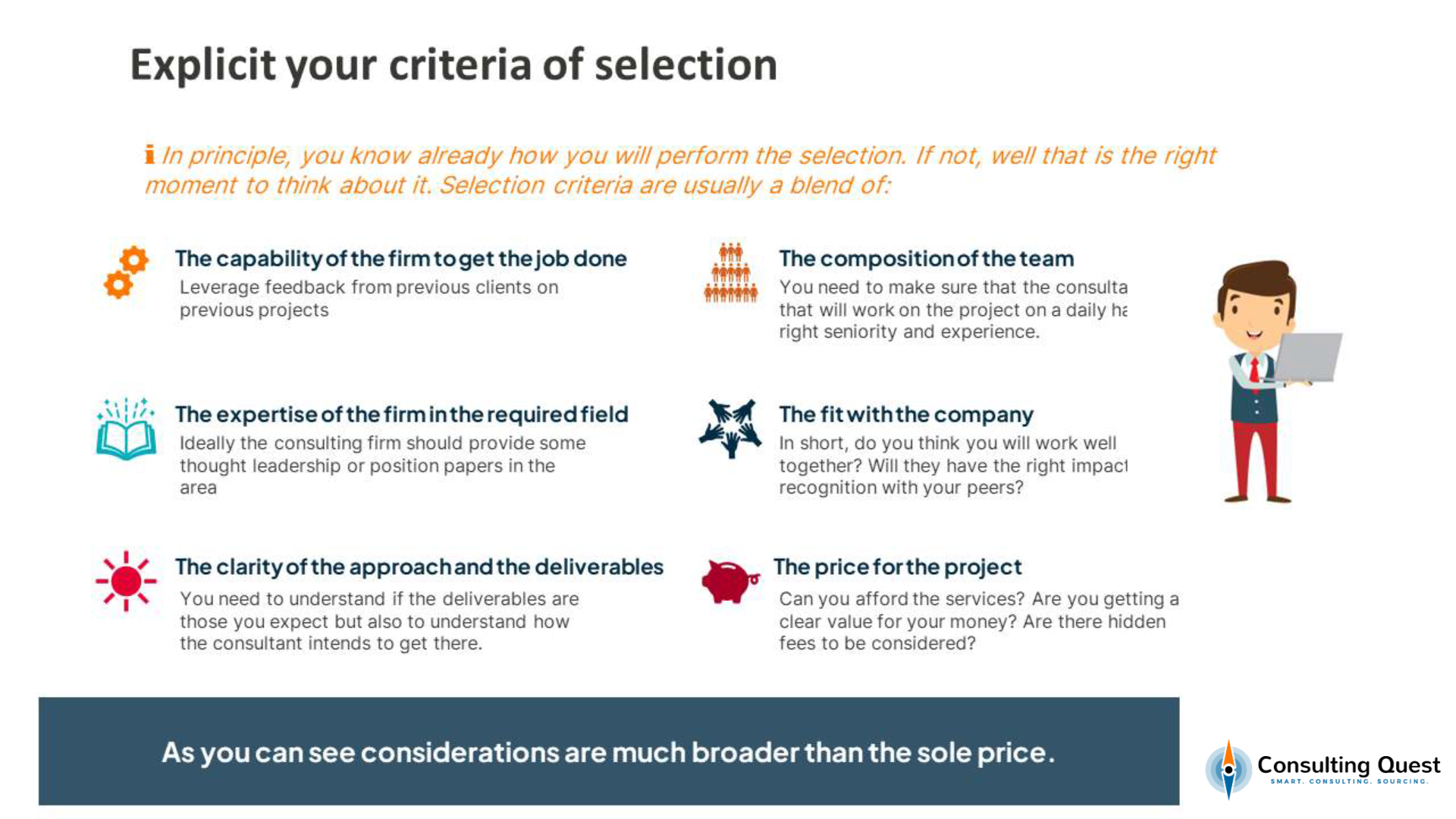
Como você pode ver, as considerações são muito mais amplas do que o preço único. Ainda que não exista uma fórmula mágica com critérios claros, comunicá-los às consultorias no início do processo é fundamental para obter uma proposta de qualidade e tomar decisões informadas e justas.
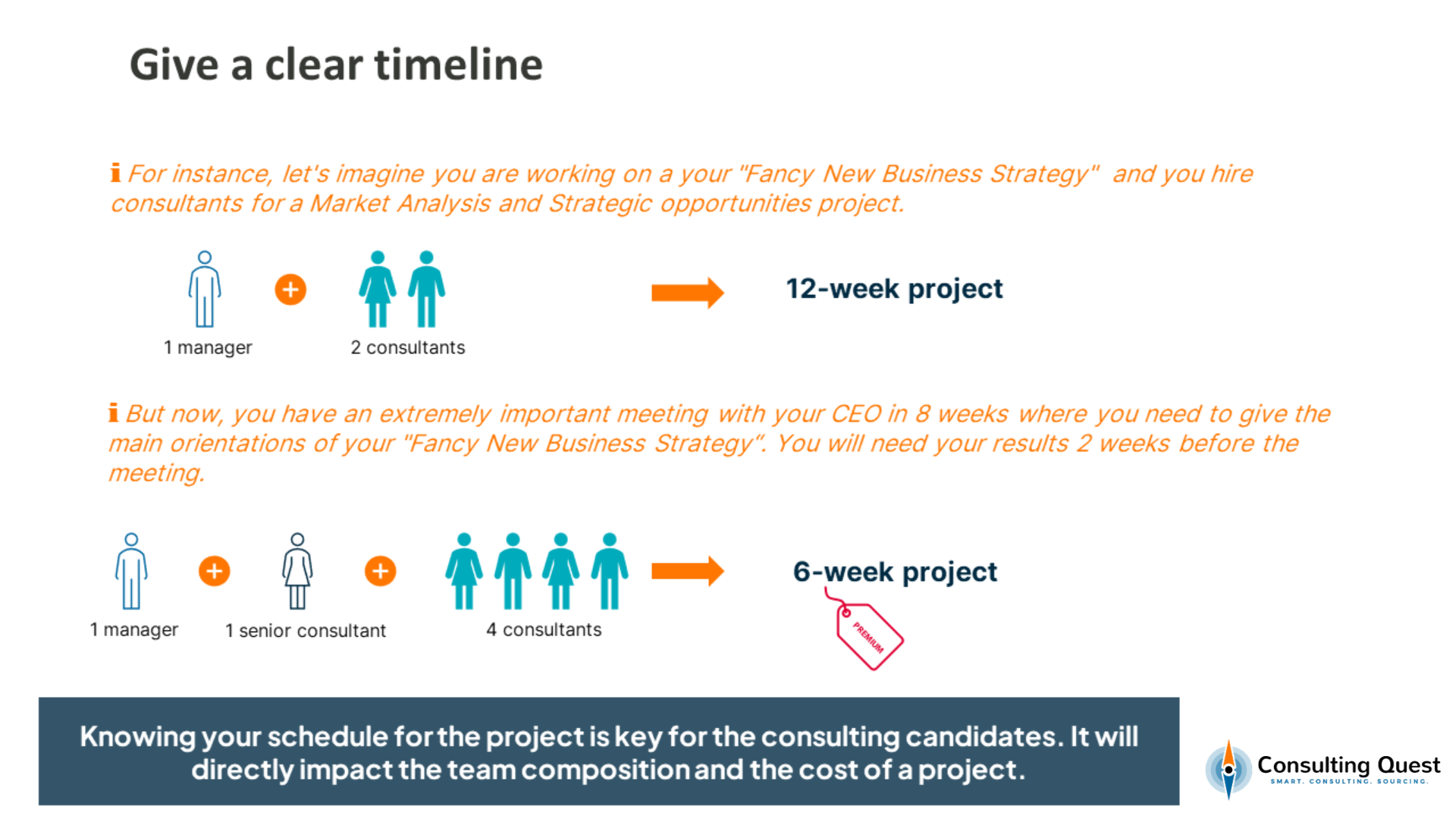
A menos que seu projeto não seja urgente, você tem um cronograma em mente ou pelo menos alguns prazos ou reuniões internas. Conhecer o seu cronograma para o projeto é fundamental para os candidatos a consultoria. Isso impactará diretamente na composição da equipe e no custo de um projeto.
Por exemplo, vamos imaginar que você tenha uma reunião extremamente importante com seu CEO em 8 semanas, onde você precisa dar as principais orientações de sua “Estratégia Fancy New Business”, por exemplo.
Você precisará ter seus resultados para uma análise de mercado e oportunidades estratégicas pelo menos 2 semanas antes de sua reunião. Significa um projeto de 6 semanas. Se o projeto for baseado na suposição de 12 semanas para 3 consultores (um gerente e dois consultores), a empresa de consultoria precisará agilizar o projeto para respeitar o seu prazo.
Eles provavelmente formarão uma equipe de um gerente, um consultor sênior e quatro consultores para comprimir o projeto em 6 semanas. Pode vir com um prêmio para garantir que os recursos sejam garantidos em tempo integral para o seu projeto.
Usuários e compradores raramente incluem seu orçamento na RFP para consultoria. No entanto, se você estiver com um orçamento muito apertado, pode fazer sentido incluir essas informações na RFP para garantir que você não perca tempo com propostas que não pode pagar.
Além disso, os consultores poderão apresentar propostas de trade-off ou design-to-cost.
Mencione seus outros requisitos na RFP para consultoria
Você pode ter outros requisitos que deseja incluir em sua RFP para serviços de consultoria. Por exemplo, você pode estar interessado em ter referências e informações de contato para verificar as referências.
Você também pode ter alguns critérios de elegibilidade vinculados às suas políticas internas de aquisição. Provavelmente seus provedores de consultoria devem ser registrados como provedores.
Não se esqueça de fornecer um único ponto de contato
Você também precisa definir o principal ponto de contato durante o processo. Será alguém do setor de compras, um dos executivos ou mesmo um terceiro? Todas as interações com empresas de consultoria durante o processo de RFP para consultoria devem passar por essa pessoa.
Permitir que as firmas de consultoria se conectem diretamente com os executivos de sua escolha daria uma vantagem às empresas estabelecidas e distorceria a concorrência.
Pensamentos finais
Elaborar um RFP eficaz para serviços de consultoria é um feito intimidador, especialmente se você nunca o fez corretamente antes. Mas com a orientação e os recursos certos, pode ser uma tarefa muito mais simples do que você esperaria.
Este guia ajuda você a entender o que acontece nesse processo, detalha as etapas para criar uma solicitação atraente para fornecedores, fornece conselhos sobre como escolher um candidato qualificado para o trabalho e até descreve métodos para uma negociação bem-sucedida.
Armado com essas dicas úteis, você certamente encontrará o consultor perfeito que atenderá perfeitamente às suas necessidades - não importa o quão complexo ou ambicioso seja. Ao reservar um tempo para criar e emitir sua RFP de maneira cuidadosa e correta, você pode se surpreender com o quanto do sucesso do seu projeto se resume a começar com o pé direito.
PS: Este guia abrangente está agora disponível na forma de um flipbook conveniente. Você também pode simplesmente clicar no botão de download e baixá-lo como um PDF para visualização posterior.

 ;
; 





 English
 Français
 Português